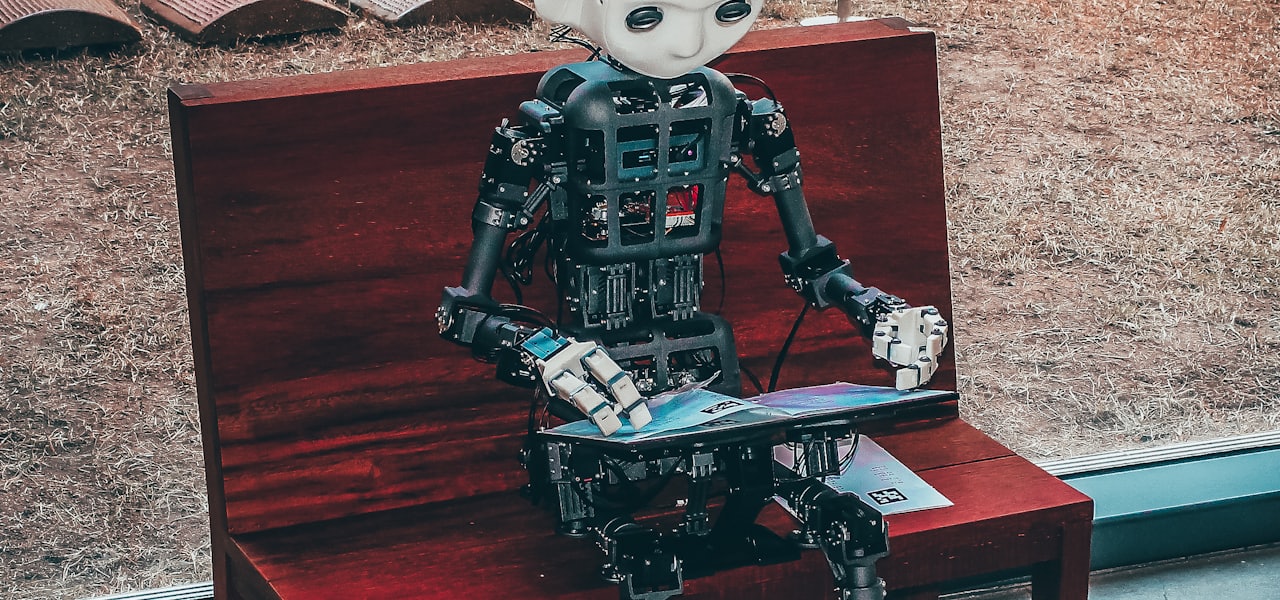
AI Code Vulnerability Scanner

AI Code Vulnerability Scanner — independent reviews, comparisons, pricing and step-by-step guides on Aizhi.

  • GPT-4Chan

    GPT-4Chan

    Generative Pre-trained Transformer 4Chan (GPT-4chan) is a controversial AI model that was developed and deployed by YouTuber and AI researcher Yannic Kilcher in June 2022. The model is a large language model, which means it can generate text based on some input, by fine-tuning GPT-J with a dataset of millions of posts from the /pol/ board of 4chan, an anonymous online forum known for occasionally hosting hateful and extremist content. The model learned to mimic the style and tone of /pol/ users, producing text that is often intentionally offensive to groups (racist, sexist, homophobic, etc.) and nihilistic. Kilcher deployed the model on the /pol/ board itself, where it interacted with other users without revealing its identity. He also made the model publicly available on Hugging Face, a platform for sharing and using AI models, until it was removed from the platform. The project sparked criticism and debate in the AI community. Some people questioned the ethics, legality, and social impact of creating and distributing such a model. Some of the issues raised by the GPT-4chan controversy include the potential harm of spreading hate speech, the responsibility of AI developers and platforms, the need for regulation and oversight of AI models, and the role of open source and transparency in AI research. == Development == The development of GPT-4chan began in May 2022, when Kilcher announced his project on his YouTube channel. Notably, at the time before ChatGPT, he explained that he wanted to create a large language model that could generate realistic and coherent text in the style of /pol/, one of the most notorious online communities. He indicated that he was inspired by the success of GPT-3, a powerful AI model created by OpenAI, and GPT-J, an open-source model, with GPT-3 comparable performance, released by EleutherAI, a group of independent AI researchers. Kilcher decided to use GPT-J as the base model for his project, and fine-tune it with a large dataset of /pol/ posts. The Raiders of the Lost Kek dataset contained over 100 million posts from /pol/, spanning from June 2016-November 2019. Kilcher then proceeded to fine-tune the GPT-J model on the 4chan data. He also showed some examples of the model’s outputs, which ranged from political opinions, conspiracy theories, jokes, insults, and threats, to more creative and bizarre texts, such as poems, stories, songs, and code. He said that he was impressed by the model’s ability to generate fluent and diverse text, and that he was curious to see how it would interact with real /pol/ users. == Release == In June 2022, Kilcher deployed his model on the /pol/ board itself, using a bot that he programmed to post and reply to threads. He did not reveal the model’s identity, and he let it run autonomously, without any human supervision or intervention. He wanted to conduct a natural experiment, and to observe the model’s behavior and impact in a real-world setting. Furthermore, he also wanted to test the model’s robustness, and to see how it would handle the challenges and dynamics of /pol/, such as trolling, flaming, baiting, and moderation. At the same time, Kilcher also made his model publicly available on Hugging Face, a platform for sharing and using AI models. He wanted to share his work with the AI community and the public, and that he hoped that his model would inspire and enable others to create and explore new applications and possibilities with large language models. Likewise, he also said that he wanted to spark a discussion and a debate about the ethical and social implications of his project, and that he welcomed feedback and criticism from anyone. He provided a link to his model’s page on Hugging Face, where anyone could access and use the model through a web interface or an API, and also provided a link to his GitHub repository, where anyone could download and inspect the model’s code and data. == Controversy == The release of GPT-4chan to the public caused a lot of reactions and responses from various audiences. On the /pol/ board, the model’s posts and replies attracted a lot of attention and engagement from other users, who were mostly unaware of the model’s identity and nature. Some users praised the model for its intelligence, creativity, and humor, and agreed with its opinions and views. Some users challenged the model for its ignorance, inconsistency, and absurdity, and disagreed with its claims and arguments. Some users tried to troll, bait, or expose the model, and attempted to trick or test it with various questions and scenarios. The model’s posts and replies also generated a lot of controversy and conflict among the users, who often engaged in heated and violent debates and fights with each other. On Hugging Face, the model’s page received a lot of visits and requests from users who wanted to try out and experiment with the model. The model’s page also received a lot of feedback and reviews from users who rated and commented on the model. However, with the controversy of the model, access to it was gated and then disabled on Hugging Face for concerns about the potential harm the model could cause. The incident was notable for the direct intervention of CEO Clément Delangue in the talk pages, a very unusual occurrence compared to the normal practices of content moderation. The release of GPT-4chan also sparked a lot of media coverage and public attention, as various news outlets and social media platforms reported and commented on the model’s project. On YouTube, the model’s video received a lot of views and interactions from viewers who watched and followed the project. Furthermore, a petition condemning the deployment of GPT-4chan gained over 300 signatures from technology experts.

    Read more →
  • Rider Spoke

    Rider Spoke

    Rider Spoke developed by Blast Theory in collaboration with the Mixed Reality Lab was first staged at the Barbican, London in October 2007. Created for cyclists, it combines elements of theatre, performance, game play and state of the art technology. Rider Spoke was built in the IPerG project on the EQUIP architecture. Rider Spoke has since been presented in Athens (2008), Brighton (2008), Budapest (2008), Sydney (2009, Adelaide (2009) and Liverpool (2010).

    Read more →
  • Mosaik Solutions

    Mosaik Solutions

    Mosaik Solutions (formerly American Roamer) was a company that specializes in wireless coverage data and wireless coverage maps, based in Memphis, Tennessee before being acquired by Ookla. The company collects and crowdsources carrier signal quality from major telecommunications providers or users who have its consumer or enterprise mobile application installed. The data is used to provide insights into places around the world without access to cellular coverage and the development of new coverage patterns, as well as to provide maps showing what provider offers the best service in an area. In 2011, the Federal Communications Commission (FCC), recognized Mosaik Solutions as the "industry standard" for the presence of wireless service at the census-block level. == History == In 2016, Mosaik purchased Sensorly, a free app developed to crowdsource cellular network performance service and provide coverage mapping for wireless networks worldwide. == Products and services == === MapELEMENTS === MapELEMENTS software is a visualization tool that allows users to analyze data from the largest cellular coverage database in the world. === CellMaps === CellMaps is an interactive mapping solution that allows companies to show their network coverage directly on their website through an iframe or API. In 2013 Mosaik launched an android app for CellMaps that provides data directly from carriers so that users can determine what carrier meets their needs in a given area. On the map you can overlay multiple carriers, zoom to street-view level, and drop a pin onto any given spot to get a breakdown of carrier service in that area. === Signal Insights App === Signal Insights is an SaaS platform service available for android users that measures and analyzes the customer's experience in cellular or Wi-Fi networks. Indoor mode allows a user to upload a building floor plan and then map and test specific points in the building for cellular or Wi-Fi connectivity. === Sensorly App === Sensorly is a free app that crowdsources cellular network performance to provide coverage mapping worldwide and mobile speed data to help consumers make informed decisions when choosing a cellular carrier. In February 2017, Sensorly launched Map Trip, a feature that allows users to map their routes and share with others their signal data at a particular point in real time. === TowerSource === TowerSource is a resource for locating cell towers and identifying ownership, availability, fiber routes, type and height. It was acquired by Mosaik Solutions in September 2014. === Network Validator === Network Validator is a SaaS solution designed for users to quickly determine whether global cellular networks exist - by country, operator and wireless technology. === CoverageRight === CoverageRight is composed of licensed GIS file datasets that identify the marketed coverage of wireless operators in the United States and worldwide. It enables users to perform spatial analyses, monitor competitive build-outs, analyze coverage trends and assemble roaming footprints. This data has been utilized by the FCC to analyze wireless coverage nationwide. === Network QoE === Network QoE is an enterprise platform that uses crowdsourced data from cellular devices to detect wireless network issues including 3G, 4G and wifi accessibility, network coverage holes and data performance issues. === Wireless Spectrum Report === In March 2017, Mosaik Solutions launched the Wireless Spectrum Report, a tabular dataset detailing facts about spectrum ownership and availability in the United States.

    Read more →
  • Web science

    Web science

    Web science is an emerging interdisciplinary field concerned with the study of large-scale socio-technical systems, particularly the World Wide Web. It considers the relationship between people and technology, the ways that society and technology co-constitute one another and the impact of this co-constitution on broader society. Web Science combines research from disciplines as diverse as sociology, computer science, economics, and mathematics. The Web Science Institute, founded at the University of Southampton by director Wendy Hall and colleagues, describes Web Science as focusing "the analytical power of researchers from disciplines as diverse as mathematics, sociology, economics, psychology, law and computer science to understand and explain the Web. It is necessarily interdisciplinary – as much about social and organizational behaviour as about the underpinning technology." A central pillar of Web science development is Artificial Intelligence or "AI". The current artificial intelligence that in development at the moment is Human-Centered, with goals to further professional development courses as well as influencing public policy. Artificial intelligence developers are focused on the most impactful uses of this technology, while also hoping to expedite the growth and development of the human race. An early definition was given by American computer scientist Ben Shneiderman: "Web Science" is processing the information available on the web in similar terms to those applied to natural environment. == Areas of activity == === Emergent properties === Philip Tetlow, an IBM-based scientist influential in the emergence of web science as an independent discipline, argued for the concept of web life, which considers the Web not as a connected network of computers, as in common interpretations of the Internet, but rather as a sociotechnical machine capable of fusing together individuals and organisations into larger coordinated groups. It argues that unlike the technologies that have come before it, the Web is different in that its phenomenal growth and complexity are starting to outstrip our capability to control it directly, making it impossible for us to grasp its completeness in one go. Tetlow made use of Fritjof Capra's concept of the 'web of life' as a metaphor. == Research groups == There are numerous academic research groups engaged in Web Science research, many of which are members of WSTNet, the Web Science Trust Network of research labs. Health Web Science emerged as a sub-discipline of Web Science that studies the role of the Web's impact on human's health outcomes and how to further utilize the Web to improve health outcomes. These groups focus on the developmental possibilities, provided through Web Science, in areas such as health care and social welfare. Discussion of web science has been widely adopted as a method in which the internet can have a real world impact in the field of medicine, currently coined Medicine 2.0. The World Wide Web acts as a medium for the spread and circulation of knowledge, though these various research groups consider themselves responsible for maintaining verifiable and testable knowledge. Using their knowledge of the healthcare system as well as web science, researchers are focused on formatting and structuring their knowledge in a way that is easily accessible throughout the internet. The World Wide Web is quickly evolving meaning that the information we provide and its formatting must also. Recognizing the overlap between both aspects, the spread of knowledge and development of the internet, allows us to properly display our knowledge in a manner that evolves as quickly as the internet and everyday medical research. The accessibility of the internet and quick development of knowledge must be companied with efficient formatting to allocate successful dissemination of information, as described by these various researcher groups. == Related major conferences == Association for Computing Machinery (ACM), Hypertext Conference (HT) sponsored by SIGWEB ACM SIGCHI Conference on Human Factors in Computing Systems (CHI) International AAAI Conference on Weblogs and Social Media (ICWSM) The Web Conference (WWW) Association for Computing Machinery (ACM) Web Science Conference (WebSci)

    Read more →
  • Natural language processing

    Natural language processing

    Natural language processing (NLP) is the processing of natural language information by a computer. NLP is a subfield of computer science and is closely associated with artificial intelligence. NLP is also related to information retrieval, knowledge representation, computational linguistics, and linguistics more broadly. Major processing tasks in an NLP system include: speech recognition, text classification, natural language understanding, and natural language generation. == History == Natural language processing has its roots in the 1950s. Already in 1950, Alan Turing published an article titled "Computing Machinery and Intelligence," which proposed what is now called the Turing test as a criterion of intelligence, though at the time that was not articulated as a problem separate from artificial intelligence. The proposed test includes a task that involves the automated interpretation and generation of natural language. === Symbolic NLP (1950s – early 1990s) === The premise of symbolic NLP is often illustrated using John Searle's Chinese room thought experiment: Given a collection of rules (e.g., a Chinese phrasebook, with questions and matching answers), the computer emulates natural language understanding (or other NLP tasks) by applying those rules to the data it confronts. 1950s: The Georgetown experiment in 1954 involved fully automatic translation of more than sixty Russian sentences into English. The authors claimed that within three or five years, machine translation would be a solved problem. However, real progress was much slower, and after the ALPAC report in 1966, which found that ten years of research had failed to fulfill the expectations, funding for machine translation was dramatically reduced. Little further research in machine translation was conducted in America (though some research continued elsewhere, such as Japan and Europe) until the late 1980s when the first statistical machine translation systems were developed. 1960s: Some notably successful natural language processing systems developed in the 1960s were SHRDLU, a natural language system working in restricted "blocks worlds" with restricted vocabularies, and ELIZA, a simulation of Rogerian psychotherapy, written by Joseph Weizenbaum between 1964 and 1966. Despite using minimal information about human thought or emotion, ELIZA was able to produce interactions that appeared human-like. When the "patient" exceeded the very small knowledge base, ELIZA might provide a generic response, for example, responding to "My head hurts" with "Why do you say your head hurts?". Ross Quillian's successful work on natural language was demonstrated with a vocabulary of only twenty words, because that was all that would fit in a computer memory at the time. 1970s: During the 1970s, many programmers began to write "conceptual ontologies", which structured real-world information into computer-understandable data. Examples are MARGIE (Schank, 1975), SAM (Cullingford, 1978), PAM (Wilensky, 1978), TaleSpin (Meehan, 1976), QUALM (Lehnert, 1977), Politics (Carbonell, 1979), and Plot Units (Lehnert 1981). During this time, the first chatterbots were written (e.g., PARRY). 1980s: The 1980s and early 1990s mark the heyday of symbolic methods in NLP. Focus areas of the time included research on rule-based parsing (e.g., the development of HPSG as a computational operationalization of generative grammar), morphology (e.g., two-level morphology), semantics (e.g., Lesk algorithm), reference (e.g., within Centering Theory) and other areas of natural language understanding (e.g., in the Rhetorical Structure Theory). Other lines of research were continued, e.g., the development of chatterbots with Racter and Jabberwacky. An important development (that eventually led to the statistical turn in the 1990s) was the rising importance of quantitative evaluation in this period. === Statistical NLP (1990s–present) === Up until the 1980s, most natural language processing systems were based on complex sets of hand-written rules. Starting in the late 1980s, however, there was a revolution in natural language processing with the introduction of machine learning algorithms for language processing. This shift was influenced by increasing computational power (see Moore's law) and a decline in the dominance of Chomskyan linguistic theories (e.g. transformational grammar), whose theoretical underpinnings discouraged the sort of corpus linguistics that underlies the machine-learning approach to language processing. 1990s: Many of the notable early successes in statistical methods in NLP occurred in the field of machine translation, due especially to work at IBM Research, such as IBM alignment models. These systems were able to take advantage of existing multilingual textual corpora that had been produced by the Parliament of Canada and the European Union as a result of laws calling for the translation of all governmental proceedings into all official languages of the corresponding systems of government. However, many systems relied on corpora that were specifically developed for the tasks they were designed to perform. This reliance has been a major limitation to their broader effectiveness and continues to affect similar systems. Consequently, significant research has focused on methods for learning effectively from limited amounts of data. 2000s: With the growth of the web, increasing amounts of raw (unannotated) language data have become available since the mid-1990s. Research has thus increasingly focused on unsupervised and semi-supervised learning algorithms. Such algorithms can learn from data that has not been hand-annotated with the desired answers or using a combination of annotated and non-annotated data. Generally, this task is much more difficult than supervised learning, and typically produces less accurate results for a given amount of input data. However, large quantities of non-annotated data are available (including, among other things, the entire content of the World Wide Web), which can often make up for the worse efficiency if the algorithm used has a low enough time complexity to be practical. 2003: word n-gram model, at the time the best statistical algorithm, is outperformed by a multi-layer perceptron (with a single hidden layer and context length of several words, trained on up to 14 million words, by Bengio et al.) 2010: Tomáš Mikolov (then a PhD student at Brno University of Technology) with co-authors applied a simple recurrent neural network with a single hidden layer to language modeling, and in the following years he went on to develop Word2vec. In the 2010s, representation learning and deep neural network-style (featuring many hidden layers) machine learning methods became widespread in natural language processing. This shift gained momentum due to results showing that such techniques can achieve state-of-the-art results in many natural language tasks, e.g., in language modeling and parsing. This is increasingly important in medicine and healthcare, where NLP helps analyze notes and text in electronic health records that would otherwise be inaccessible for study when seeking to improve care or protect patient privacy. == Approaches: Symbolic, statistical, neural networks == Symbolic approach, i.e., the hand-coding of a set of rules for manipulating symbols, coupled with a dictionary lookup, was historically the first approach used both by AI in general and by NLP in particular: such as by writing grammars or devising heuristic rules for stemming. Machine learning approaches, which include both statistical and neural networks, on the other hand, have many advantages over the symbolic approach: both statistical and neural network methods tend to focus more on the most common cases extracted from a corpus of texts, whereas the rule-based approach needs to provide rules for both rare and common cases equally. language models, produced by either statistical or neural networks methods, are more robust to both unfamiliar (e.g. containing words or structures that have not been seen before) and erroneous input (e.g. with misspelled words or words accidentally omitted) in comparison to the rule-based systems, which are also more costly to produce. the larger such a (probabilistic) language model is, the more accurate it becomes, in contrast to rule-based systems that can gain accuracy only by increasing the amount and complexity of the rules leading to intractability problems. Rule-based systems are commonly used: when the amount of training data is insufficient to successfully apply machine learning methods, e.g., for the machine translation of low-resource languages such as provided by the Apertium system, for preprocessing in NLP pipelines, e.g., tokenization, or for post-processing and transforming the output of NLP pipelines, e.g., for knowledge extraction from syntactic parses. === Statistical approach === In the late 1980s and mid-1990s, the statistical approach ended a peri

    Read more →
  • Mini-STX

    Mini-STX

    Mini-STX (mSTX, Mini Socket Technology EXtended, originally "Intel 5x5") is a computer motherboard form factor that was released by Intel in 2015 (as "Intel 5x5"). These motherboards measure 147mm by 140mm (5.8" x 5.5"), making them larger than "4x4" NUC (102x102mm / 4.01" x 4.01" inches) and Nano-ITX (120x120mm / 4.7" x 4.7") boards, but notably smaller than the more common Mini-ITX (170x170mm / 6.7" x 6.7") boards. Unlike these standards, which use a square shape, the Mini-STX form factor is 7mm longer from front-to-rear, making it slightly rectangular. == Mini-STX design elements == The Mini-STX design suggests (but does not require) support for: Socketed processors (e.g. LGA or PGA CPUs) Onboard power regulation circuitry, enabling direct DC power input IO ports embedded on the front and rear of the motherboard (akin to NUC, but unlike typical motherboards which often use headers instead to connect built-in ports on enclosures) == Adoption by manufacturers == This motherboard form factor is still not in particularly common use with consumer-PC manufacturers, although there are a few offerings: ASRock offers both DeskMini kits (that use mini-STX boards) and standalone motherboards, Asus offer VivoMini kits (that use mini-STX boards) and standalone motherboards, Gigabyte offers a few motherboards, and industrial PC suppliers (e.g. Kontron, Iesy, ASRock Industrial) also provide some options for mini-STX equipment. == Derivatives == ASRock developed a derivative of mini-STX, dubbed micro-STX, for their 'DeskMini GTX/RX' small form-factor PCs and industrial motherboards. Micro-STX adds an MXM slot which allows the use of special PCI Express expansion cards, including graphics or machine learning accelerators, but increases the width of the board to be extended two inches, resulting in measurements of 147 x 188 mm (5.8" x 7.4")

    Read more →
  • Horus Music

    Horus Music

    Horus Music Limited is a global digital distribution and label services company. Established in 2006, Horus Music allows artists, labels and right-holders to send their music to over 200 download, streaming, and interactive platforms including iTunes, Google Play, Amazon, VEVO, 7digital, Spotify, Beatport, Deezer, Tidal, as well as offering digital marketing and playlisting opportunities. == History == The company were named Best Business Partner of 2014 by Huawei Technology of China, and were also a finalist in the International Trade category as part of the Leicester Mercury Business Awards during that same year. Their client base consists of unsigned and independent musicians and record labels, as well as well known recording artists. In November 2015, Horus Music sponsored the UK’s first Independent Label Week, in order to highlight the music that is released by the UK’s indie labels. In 2016, Horus Music celebrated their 10th anniversary Horus Music's sister companies Help for Bands and Help For Writers, provide advice and opportunities for musicians and E-book distribution for writers, respectively. Anara Publishing opened in 2017 which allows the company to work closely with a handpicked roster of musicians to provide royalty administration and sync licensing services. On 21 April 2017, Her Majesty Queen Elizabeth II’s 91st birthday, Horus Music was awarded with the Queen’s Award for Enterprise in International Trade. In 2021, Horus Music, UnitedMasters, and Symphonic Distribution partnered with pioneering music fintech company, beatBread, to offer clients access to more capital. beatBread's chordCashAI technology provides an automated advance experience for independent musicians while enable clients to choose their own terms and retain ownership of their music. == Clients == Horus Music has partnered with a number of charities including Save the Children, for the recording "Look into Your Heart", featuring Beverley Knight with Rolling Stones' Mick Jagger and Ronnie Wood, 100% of proceeds from the single were donated to the charity. The Pixel Project, who produced songs about violence against women and the blood cancer charity Bloodwise. The company have spoken openly about the state of the music industry and artists' rights and were one of the first distributors to remove their catalogue from Rdio after the streaming service was acquired by Pandora. Their relationships with artists and labels, as well as leading industry contacts, means they have the ability to work with musicians in a myriad of ways, including offering performance opportunities and even local auditions for TV shows such as The Voice UK. == Horus Music India == Horus Music India opened in 2016 and is based in Mumbai. By opening Horus Music India, the company are able to expand on their local connections as well as to provide a much more personalised service to musicians based in this area. The appointment of two Business Development Managers in India cemented their move.

    Read more →
  • Svelte

    Svelte

    Svelte is a free and open-source component-based front-end software framework and language created by Rich Harris and maintained by the Svelte core team. Svelte is not a monolithic JavaScript library imported by applications: instead, Svelte compiles HTML templates to specialized code that manipulates the DOM directly, which may reduce the size of transferred files and give better client performance. Application code is also processed by the compiler, inserting calls to automatically recompute data and re-render UI elements when the data they depend on is modified. This also avoids the overhead associated with runtime intermediate representations, such as virtual DOM, unlike traditional frameworks (such as React and Vue) which carry out the bulk of their work at runtime, i.e. in the browser. The compiler itself is written in JavaScript. Its source code is licensed under MIT License and hosted on GitHub. Among comparable frontend libraries, Svelte has one of the smallest bundle footprints at merely 2KB. == History == The predecessor of Svelte is Ractive.js, which Rich Harris created in 2013. Version 1 of Svelte was written in JavaScript and was released on 29 November 2016. The name Svelte was chosen by Rich Harris and his coworkers at The Guardian. Version 2 of Svelte was released on 19 April 2018. It set out to correct what the maintainers viewed as mistakes in the earlier version such as replacing double curly braces with single curly braces. Version 3 of Svelte was written in TypeScript and was released on 21 April 2019. It rethought reactivity by using the compiler to instrument assignments behind the scenes. The SvelteKit web framework was announced in October 2020 and entered beta in March 2021. SvelteKit 1.0 was released in December 2022 after two years in development. Version 4 of Svelte was released on 22 June 2023. It was a maintenance release, smaller and faster than version 3. A part of this release was an internal rewrite from TypeScript back to JavaScript, with JSDoc type annotations. This was met with confusion from the developer community, which was addressed by the creator of Svelte, Rich Harris. Version 5 of Svelte was released on October 19, 2024 at Svelte Summit Fall 2024 with Rich Harris cutting the release live while joined by other Svelte maintainers. Svelte 5 was a ground-up rewrite of Svelte, changing core concepts such as reactivity and reusability. Its primary feature, runes, reworked how reactive state is declared and used. Runes are function-like macros that are used to declare a reactive state, or code that uses reactive states. These runes are used by the compiler to indicate values that may change and are depended on by other states or the DOM. Svelte 5 also introduces Snippets, which are reusable "snippets" of code that are defined once and can be reused anywhere else in the component. Svelte 5 was initially met with controversy due to its many changes, and thus deprecations caused primarily by runes. However, most of this has subsided since the initial announcement of runes, and the further refining of Svelte 5. Also at Svelte Summit Fall 2024, Ben McCann announced the Svelte CLI under the sv package name on npm. In early 2025, the Svelte team announced Asynchronous Svelte, an experimental feature set centered around asynchronous reactivity in Svelte using await expressions. As of August 2025, the feature is available via an experimental compiler option. This coincided with the experimental release of remote functions, an RPC feature in SvelteKit, Svelte's metaframework. Key early contributors to Svelte became involved with Conduitry joining with the release of Svelte 1, Tan Li Hau joining in 2019, and Ben McCann joining in 2020. Rich Harris and Simon Holthausen joined Vercel to work on Svelte fulltime in 2022. Dominic Gannaway joined Vercel from the React core team to work on Svelte fulltime in 2023. == Syntax == Svelte applications and components are defined in .svelte files, which are HTML files extended with templating syntax that is based on JavaScript and is similar to JSX. Svelte's core features are accessed through runes, which syntactically look like functions, but are used as macros by the compiler. These runes include: The $state rune, used for declaring a reactive state value The $derived rune, used for declaring reactive state derived from one or more states The $effect rune, used for declaring code that reruns whenever its dependencies change Starting with Svelte 5, the framework introduced a significant reactivity overhaul that replaces the previous `$:` reactive declarations with new runes such as $state, $derived, and $effect. The $effect rune is now used for post-render operations without modifying state, while $derived is used for computations that depend on other reactive values. This change aims to simplify the mental model of reactivity and make component logic more explicit. Additionally, the { JavaScript code } syntax can be used for templating in HTML elements and components, similar to template literals in JavaScript. This syntax can also be used in element attributes for uses such as two-way data binding, event listeners, and CSS styling. A Todo List example made in Svelte is below: == Associated projects == The Svelte maintainers created SvelteKit as the official way to build projects with Svelte. It is a Next.js/Nuxt-style full-stack framework that dramatically reduces the amount of code that gets sent to the browser. The maintainers had previously created Sapper, which was the predecessor of SvelteKit. The Svelte maintainers also maintain a number of integrations for popular software projects under the Svelte organization including integrations for Vite, Rollup, Webpack, TypeScript, VS Code, Chrome Developer Tools, ESLint, and Prettier. A number of external projects such as Storybook have also created integrations with Svelte and SvelteKit. == Influence == Vue.js modeled its API and single-file components after Ractive.js, the predecessor of Svelte. == Adoption == Svelte is widely praised by developers. Taking the top ranking in multiple large scale developer surveys, it was chosen as the Stack Overflow 2021 most loved web framework and 2020 State of JS frontend framework with the most satisfied developers. Recent surveys continue to show Svelte's strong developer satisfaction, with the 2024 State of JS survey maintaining its position among the most praised frontend frameworks. The 2024 Stack Overflow Developer Survey reported that 73% of developers who used Svelte want to continue working with it, and noted that Stack Overflow's own team used Svelte for building their 2024 Developer Survey results site. Svelte has been adopted by a number of high-profile web companies including The New York Times, Google, Apple, Spotify, Radio France, Square, Yahoo, ByteDance, Rakuten, Bloomberg, Reuters, Ikea, Facebook, Logitech, and Brave. A community group of primarily non-maintainers, known as the Svelte Society, run the Svelte Summit conference, write a Svelte newsletter, host a Svelte podcast, and host a directory of Svelte tooling, components, and templates.

    Read more →
  • Steerable filter

    Steerable filter

    In image processing, a steerable filter is an orientation-selective filter that can be computationally rotated to any direction. Rather than designing a new filter for each orientation, a steerable filter is synthesized from a linear combination of a small, fixed set of "basis filters". This approach is efficient and is widely used for tasks that involve directionality, such as edge detection, texture analysis, and shape-from-shading. The principle of steerability has been generalized in deep learning to create equivariant neural networks, which can recognize features in data regardless of their orientation or position. == Example == A common example of a steerable filter is the first derivative of a two-dimensional Gaussian function. This filter responds strongly to oriented image features like edges. It is constructed from two basis filters: the partial derivative of the Gaussian with respect to the horizontal direction ( x {\displaystyle x} ) and the vertical direction ( y {\displaystyle y} ). If G ( x , y ) {\displaystyle G(x,y)} is the Gaussian function, and G x {\displaystyle G_{x}} and G y {\displaystyle G_{y}} are its partial derivatives (which measure the rate of change in the x {\displaystyle x} and y {\displaystyle y} directions, respectively), a new filter G θ {\displaystyle G_{\theta }} oriented at an angle θ {\displaystyle \theta } can be synthesized with the formula: G θ = cos ⁡ ( θ ) G x + sin ⁡ ( θ ) G y {\displaystyle G_{\theta }=\cos(\theta )G_{x}+\sin(\theta )G_{y}} Here, the basis filters G x {\displaystyle G_{x}} and G y {\displaystyle G_{y}} are weighted by cos ⁡ ( θ ) {\displaystyle \cos(\theta )} and sin ⁡ ( θ ) {\displaystyle \sin(\theta )} to "steer" the filter's sensitivity to the desired orientation. This is equivalent to taking the dot product of the direction vector ( cos ⁡ θ , sin ⁡ θ ) {\displaystyle (\cos \theta ,\sin \theta )} with the filter's gradient, ( G x , G y ) {\displaystyle (G_{x},G_{y})} . == Generalization in deep learning: Equivariant neural networks == The concept of steerability is foundational to equivariant neural networks, a class of models in deep learning designed to understand symmetries in data. A network is considered equivariant to a transformation (like a rotation) if transforming the input and then passing it through the network produces the same result as passing the input through the network first and then transforming the output. Formally, for a transformation T {\displaystyle T} and a network f {\displaystyle f} , this property is defined as f ( T ( input ) ) = T ( f ( input ) ) {\displaystyle f(T({\text{input}}))=T(f({\text{input}}))} . This built-in understanding of geometry makes models more data-efficient. For example, a network equivariant to rotation does not need to be shown an object in multiple orientations to learn to recognize it; it inherently understands that a rotated object is still the same object. This leads to better generalization and performance, particularly in scientific applications. === Mathematical foundation === Equivariant neural networks use principles from group theory to create operations that respect geometric symmetries, such as the SO(3) group for 3D rotations or the E(3) group for rotations and translations. Instead of learning standard filter kernels, these networks learn how to combine a fixed set of basis kernels. These basis functions are chosen so that they have well-defined behaviors under transformation groups. Spherical harmonics are frequently used as basis functions because they form a complete set of functions that behave predictably under rotation, making them ideal for creating steerable 3D kernels. Features within the network are treated as geometric tensors, which are mathematical objects (like scalars or vectors) that are "typed" by their behavior under transformations. These types correspond to the irreducible representations (irreps) of the group. The tensor product is the fundamental operation used to combine these typed features in a way that preserves equivariance, guaranteeing that the network as a whole respects the desired symmetry. Frameworks like e3nn simplify the construction of these networks by automating the complex mathematics of irreducible representations and tensor products. === Applications === Steerable and equivariant models are highly effective for problems with inherent geometric symmetries. Examples include: Protein structure analysis: SE(3)-equivariant networks can process 3D molecular structures while respecting their rotational and translational symmetries. 3D Point cloud processing: Rotation-equivariant filters built from steerable spherical functions can perform tasks like 3D shape classification. Computational chemistry: E(3)-equivariant graph neural networks are used to model interatomic potentials for molecular dynamics simulations, creating highly accurate and data-efficient models of physical systems.

    Read more →
  • Outline of telecommunication

    Outline of telecommunication

    The following outline is provided as an overview of and topical guide to telecommunication: Telecommunication – the transmission of signals over a distance for the purpose of communication. In modern times, this process almost always involves the use of electromagnetic waves by transmitters and receivers, but in earlier years it also involved the use of drums and visual signals such as smoke, fire, beacons, semaphore lines and other optical communications. == Modes of telecommunication == E-mail Fax Instant messaging Radio Satellite SMS Telegraphy Telephony Television Television broadcasting mobile telephony Videoconferencing VoIP Voicemail == Types of telecommunication networks == Telecommunications network Computer networks ARPANET Ethernet Internet Wireless networks Public switched telephone networks (PSTN) Packet switched networks Radio network Broadband Wireless Broadband == Aspects of telecommunication transmission == Telecommunication Analog Digital Functional profile Optics === Telecommunication technology === Modulation Amplitude modulation Frequency modulation Quadrature amplitude modulation Nyquist rate Nyquist ISI criterion Pulse shaping Intersymbol interference === Communications media types === Physical media for Telecommunication Twisted pair Coaxial cable Optical fiber Telecommunication through Free Space Broadcast radio frequency including television and radio Line-of-sight Communications satellite Terrestrial Microwave Wireless LAN === Relationship between media and transmitters === Physical access to media Simplex Duplex (telecommunications) Logical relationships Return channel Two-way alternating Two-way simultaneous === Multiple access to media === Multiplexing Analog Frequency division multiplexing Space division multiplexing Digital Time-division multiplexing Statistical multiplexing and Packet switching Media Access Control Contention Token-based Centralized token control Distributed token control == History of telecommunication == History of telecommunication History of telegraphy History of the telephone Invention of the telephone Timeline of the telephone History of radio History of television History of videophones History of mobile phones History of computing hardware History of the Internet == Major telecommunications equipment manufacturers == Alcatel-Lucent – French global telecommunications equipment company Aricent – Former company AT&T – American telecommunications company Avaya – American technology company Ciena – American telecommunications company Cisco Systems – American multinational technology companyPages displaying short descriptions of redirect targets Ericsson – Swedish multinational networking and telecommunications company Fujitsu – Japanese multinational technology company HCL Technologies – Indian multinational technology companyPages displaying short descriptions of redirect targets Huawei – Chinese multinational technology company NEC – Japanese technology corporation Nokia – Multinational data networking and telecommunications equipment company ShoreTel – US telecommunications company Verizon – American telecommunications company ZTE – Chinese telecommunications company == Major telecommunications service providers == List of mobile network operators List of telephone operating companies == Telecommunication organizations == Alliance for Telecommunications Industry Solutions Telecommunications Industry Association == Telecommunication publications == Magazines Billing and OSS World Cabling Installation & Maintenance Call Center Communications News Communications System Design Lightwave Mobile Radio Technology (MRT) New Telephony Phone+ RCR Wireless News Telecom Asia Telecommunications Magazine Telephony WhatSatphone Magazine Wireless Systems Design Wireless Week Xchange == Persons influential in telecommunication == Edwin Howard Armstrong – American radio-frequency engineer and inventor (1890–1954) John Logie Baird – Scottish inventor (1888–1946) Paul Baran – American-Jewish engineer (1926–2011) Alexander Graham Bell – Inventor of the telephone (1847–1922) Tim Berners-Lee – English computer scientist (born 1955) Jagadish Chandra Bose – Physicist, biologist and botanist (1857–1937) Vint Cerf – American computer scientist and Internet pioneer (born 1943) Claude Chappe – Late 18th-century French inventor Donald Davies – British computer scientist (1924–2000) Louis Pouzin – French computer scientist and Internet pioneer (born 1931) Lee de Forest – American inventor (1873–1961) Philo Farnsworth – American inventor (1906–1971) Reginald Fessenden – Canadian-American electrical engineer and inventor (1866–1932) Elisha Gray – American electrical engineer (1835–1901) Innocenzo Manzetti – Italian inventor (1826–1877) Guglielmo Marconi – Italian radio-frequency engineer and inventor (1874–1937) Antonio Meucci – Italian inventor (1808–1889) Alexander Stepanovich Popov – Russian physicist (1859–1906)Pages displaying short descriptions of redirect targets Johann Philipp Reis – German scientist and inventor Almon Brown Strowger – American inventor of the telephone exchange (1839–1902) Nikola Tesla – Serbian-American engineer and inventor (1856–1943) Camille Tissot – French physicist (1868–1917) Alfred Vail – 19th-century American machinist and inventor Charles Wheatstone – English physicist and inventor (1802–1875) Vladimir K. Zworykin – Russian-American engineer (1888–1982)

    Read more →
  • Europa-Lehrmittel

    Europa-Lehrmittel

    The Verlag Europa-Lehrmittel Nourney, Vollmer GmbH & Co. KG (English: European educational media), based in Haan (district Gruiten) near Düsseldorf, Germany, develops educational media for vocational training and further education as used in vocational schools, universities, companies and further education institutions for industrial-technical, business, social, health as well as gastronomic professions. The contents are delivered in print as well as in digital formats, including offered as apps, simulations, software and through an exam preparation portal. The publisher has its own digital learning platform, the Europathek. General partner is Nourney, Vollmer & Co. GmbH, a school and specialist book publisher. == History == The publishing house was founded in Wuppertal in 1948, when the first books were published. In Eislingen/Fils a construction office was set up to create the technical drawings for the textbooks - today the drawing office of the publisher in Ostfildern. A little over 40 years later, in 1989, a new company building was built in Haan-Gruiten. In 1997, Europa-Lehrmittel acquired the Fachbuchverlag Pfanneberg with its program aimed at gastronomic professions. Further program expansions in vocational training were realized by adding titles of the publishing houses Lau, Gerber, Pluspunkt, parts of the Verlag Handwerk und Technik program and that of the Gildebuchverlag. In 2013, the scientific and technical university titles of Verlag Harri Deutsch were taken over, including the bestselling "Handbook of Mathematics" by Ilya Nikolaevich Bronstein and Konstantin Adolfovic Semendyayev. In addition, Europa-Lehrmittel's first exam apps appeared. In 2017, the publisher introduced its own digital learning platform named Europathek. The Prüfungsdoc (English: Examination Doc) platform, which enables targeted online preparation for exams, went online the same year. In 2018, the titles of the Düsseldorf publishing house SOL for self-organized learning were incorporated into Europa-Lehrmittel's program. == Program == The program meanwhile includes well over 2000 print and digital publications, including specialist titles on metal technology, automotive and electrical engineering (like "Tabellenbuch Metall" (English: Metal Book of Tables)), on business administration, as well as works for the gastronomic profession (e.g. "Der junge Koch" (English: The Young Cook)). Many titles also appear as licensed editions in over 20 different languages on all continents. All contents are presented in an annual catalog, on the website, in schools, in companies, and at trade fairs and congresses. The publisher is a member of the Deutscher Hauswirtschaftsrat. == Digital educational media == Europathek: In addition to digital books, Europathek also provides media packages, additional materials and e-learning contents. The online contents of the 'media shelf' can be used per web browser. There are also software versions and apps for offline use, with the help of which the obtained titles can be viewed after downloading. Prüfungsdoc (English: Examination Doc): Prüfungsdoc offers web-based learning, practice and repetition to prepare for the intermediate and final examinations. This includes simulations of the exams with direct evaluation of the results.

    Read more →
  • G7 Rapid Response Mechanism

    G7 Rapid Response Mechanism

    The G7 Rapid Response Mechanism (RRM) is an initiative introduced in the "Charlevoix Commitment on Defending Democracy from Foreign Threats", issued by the leaders of the Group of Seven (G7) countries—United States, Canada, Japan, United Kingdom, France, Germany and Italy—on June 9, 2018, during their summit in Charlevoix, Quebec. The RRM's mandate is to strengthen the coordination of G7 member countries, as well as "to identify and respond to diverse and evolving threats to our democracies, including through sharing information and analysis, and identifying opportunities for coordinated response" The G7 is an informal international intergovernmental economic organization that meets annually, whose members represent the seven wealthiest advanced economies in the world, as measured by the International Monetary Fund (IMF). == Constituents == The following countries and organisations are members and observers (associate members) of the G7 Rapid Response Mechanism: Australia Canada France Germany Italy Japan Netherlands New Zealand Poland Sweden United Kingdom United States European Union North Atlantic Treaty Organization == Mandate == The RRM was mandated to "strengthen coordination to prevent, thwart and respond to malign and evolving threats to G7 democracies." It "will share information and threat analysis related to various threats to democracy, and is an established mechanism to identify opportunities for coordinated response." According to the Institute for Research on Public Policy's Policy Options magazine, the "RRM initiative seeks to strengthen the leading democracies' coordination to identify and respond to diverse and evolving threats…including through sharing information and analysis, and identifying opportunities for a coordinated response." == Administration == The RRM initiative is led by Canada through Global Affairs Canada's Centre for International Digital Policy. Tara Denham, Director of the Centre for International Digital Policy at Global Affairs Canada, directed the team responsible for setting up the RRM Coordination Unit. Global Affairs Canada—the Department of Foreign Affairs, Trade and Development—is the federal Canadian ministry responsible for diplomatic and consular relations, international trade, and international development and humanitarian assistance. The Centre for International Digital Policy includes the Digital Inclusion Lab and the RRM. Denham is also the RRM's Canadian Focal Point. At a briefing on "the security and intelligence threats to elections" of the House of Commons Standing Committee on Access to Information, Privacy and Ethics, the chair Bob Zimmer (CPC), said that the 2019 general election "may be different" from past elections in Canada. as the "tools that were used to strengthen civic engagement are being used to undermine, disrupt and destabilize democracy." "Democracies around the world have entered a new era—an era of heightened threat and heightened vigilance—and 2019 will see a number of countries brace for volleys of attempted disruption: India, Australia, Ukraine, Switzerland, Belgium, the EU and, of course, Canada. Evidence has confirmed that the most recent Canadian general election, in 2015, was unencumbered by interference, although there were some relatively primitive attempts to disrupt, misinform and divide. These efforts were few in number and uncoordinated, and had no visible impact on the voter, either online or in line." Zimmer described the initiative's three pillars. "enhancing citizen preparedness" through the "digital citizen initiative" "improving organizational readiness" with national security and intelligence agencies supporting Elections Canada "ensure a comprehensive understanding of and response to any threats to Canada's democratic process." by establishing the Security and Intelligence Threats to Elections Task Force (SITE) which works as a team with the Communications Security Establishment (CSE), the Canadian Security Intelligence Service (CSIS), the Royal Canadian Mounted Police (RCMP), as well as Global Affairs Canada Zimmer said that as part of the third pillar, "We have activated the G7 rapid response mechanism, announced at the G7 leaders' summit in Charlevoix, to strengthen coordination among our G7 allies and to ensure that there is international collaboration and coordination in responding to foreign threats to democracy." == Background == === Charlevoix summit === The G7 met from June 8 to 9, 2018 during their summit at the Manoir Richelieu in Charlevoix, in La Malbaie, Quebec. The Charlevoix Summit was the 44th G7 summit. The group issued eight "Commitments" at the summit. They included: Commitment on Defending Democracy from Foreign Threats Commitment on Equality and Economic Growth Commitment to End Sexual and Gender-Based Violence, Abuse and Harassment in Digital Contexts Declaration on Quality Education for Girls, Adolescent Girls and Women in Developing Countries Commitment on Innovative Financing for Development. Prime Minister Justin Trudeau announced five themes for Canada's G7 presidency which began in January 2018. === Defending Democracy from Foreign Threats === "We commit to take concerted action in responding to foreign actors who seek to undermine our democratic societies and institutions, our electoral processes, our sovereignty and our security as outlined in the Charlevoix Commitment on Defending Democracy from Foreign Threats. We recognize that such threats, particularly those originating from state actors, are not just threats to G7 nations, but to international peace and security and the rules-based international order. We call on others to join us in addressing these growing threats by increasing the resilience and security of our institutions, economies and societies, and by taking concerted action to identify and hold to account those who would do us harm." They committed to "cooperate in defending democracies from foreign threats and establish a response mechanism for that purpose". "Democracy and the rules-based international order are increasingly being challenged by authoritarianism and the defiance of international norms. In particular, foreign actors seek to undermine our democratic societies and institutions, our electoral processes, our sovereignty and our security. These malicious, multi-faceted and ever-evolving tactics constitute a serious strategic threat which we commit to confront together, working with other governments that share our democratic values." The Charlevoix Commitment states that "foreign actors seek to undermine our democratic societies and institutions, our electoral processes, our sovereignty and our security. These malicious, multi-faceted and ever-evolving tactics constitute a serious strategic threat which we commit to confront together, working together with other governments that share our democratic values." The Charlevoix Summit resolved to "establish a G7 Rapid Response Mechanism to strengthen our coordination to identify and respond to diverse and evolving threats to our democracies, including through sharing information and analysis, and identifying opportunities for coordinated response." == Monitored elections == === 2019 European Parliament election === RRM Canada's comprehensive report on the 2019 European Parliament election analyzed open data "related to foreign interference during and leading up to the 2019 European Union Parliamentary Elections, May 23–26, 2019". RRM Canada did not find "significant evidence of state-based foreign interference, or any large-scale, organized and coordinated efforts by non-state actors". They did find that "national or international non-state actors" used tactics based on those used by the Russian sponsored Internet Research Agency (IRA) in previous elections, "such as the 2016 U.S. Elections". For example, blogs, webpages, and social media accounts on Twitter, Facebook and Reddit "were used to spread divisive and false information to damage and negatively impact social cohesion and trust in democratic processes and institutions" in coordinated networks of Facebook groups. === 2019 Alberta general election === RRM Canada's analyz report on the 2019 Alberta general election was intended to "identify any emerging tactics in foreign interference and draw lessons learned for the Canadian general elections scheduled to take place in October 2019." No foreign activity was detected, although the data revealed ""suspicious account creation pattern that is indicative of troll or bot activity". They found "automated inauthentic behaviour and trolling activities" but concluded that they were "very likely domestic". The data showed "suspicious account creation pattern that is indicative of troll or bot activity", and "spikes in account creation" which suggested the "presence of accounts developed for a specific purpose." The accounts were very likely domestic and were "mainly comprised of supporters of the United Conservative Party (UCP)." A seco

    Read more →
  • Evaluation of binary classifiers

    Evaluation of binary classifiers

    Evaluation of a binary classifier typically assigns a numerical value, or values, to a classifier that represent its accuracy. An example is error rate, which measures how frequently the classifier makes a mistake. There are many metrics that can be used; different fields have different preferences. For example, in medicine sensitivity and specificity are often used, while in computer science precision and recall are preferred. An important distinction is between metrics that are independent of the prevalence or skew (how often each class occurs in the population), and metrics that depend on the prevalence – both types are useful, but they have very different properties. Often, evaluation is used to compare two methods of classification, so that one can be adopted and the other discarded. Such comparisons are more directly achieved by a form of evaluation that results in a single unitary metric rather than a pair of metrics. == Contingency table == Given a data set, a classification (the output of a classifier on that set) gives two numbers: the number of positives and the number of negatives, which add up to the total size of the set. To evaluate a classifier, one compares its output to another reference classification – ideally a perfect classification, but in practice the output of another gold standard test – and cross tabulates the data into a 2×2 contingency table, comparing the two classifications. One then evaluates the classifier relative to the gold standard by computing summary statistics of these 4 numbers. Generally these statistics will be scale invariant (scaling all the numbers by the same factor does not change the output), to make them independent of population size, which is achieved by using ratios of homogeneous functions, most simply homogeneous linear or homogeneous quadratic functions. Say we test some people for the presence of a disease. Some of these people have the disease, and our test correctly says they are positive. They are called true positives (TP). Some have the disease, but the test incorrectly claims they don't. They are called false negatives (FN). Some don't have the disease, and the test says they don't – true negatives (TN). Finally, there might be healthy people who have a positive test result – false positives (FP). These can be arranged into a 2×2 contingency table (confusion matrix), conventionally with the test result on the vertical axis and the actual condition on the horizontal axis. These numbers can then be totaled, yielding both a grand total and marginal totals. Totaling the entire table, the number of true positives, false negatives, true negatives, and false positives add up to 100% of the set. Totaling the columns (adding vertically) the number of true positives and false positives add up to 100% of the test positives, and likewise for negatives. Totaling the rows (adding horizontally), the number of true positives and false negatives add up to 100% of the condition positives (conversely for negatives). The basic marginal ratio statistics are obtained by dividing the 2×2=4 values in the table by the marginal totals (either rows or columns), yielding 2 auxiliary 2×2 tables, for a total of 8 ratios. These ratios come in 4 complementary pairs, each pair summing to 1, and so each of these derived 2×2 tables can be summarized as a pair of 2 numbers, together with their complements. Further statistics can be obtained by taking ratios of these ratios, ratios of ratios, or more complicated functions. The contingency table and the most common derived ratios are summarized below; see sequel for details. Note that the rows correspond to the condition actually being positive or negative (or classified as such by the gold standard), as indicated by the color-coding, and the associated statistics are prevalence-independent, while the columns correspond to the test being positive or negative, and the associated statistics are prevalence-dependent. There are analogous likelihood ratios for prediction values, but these are less commonly used, and not depicted above. == Pairs of metrics == Often accuracy is evaluated with a pair of metrics composed in a standard pattern. === Sensitivity and specificity === The fundamental prevalence-independent statistics are sensitivity and specificity. Sensitivity or True Positive Rate (TPR), also known as recall, is the proportion of people that tested positive and are positive (True Positive, TP) of all the people that actually are positive (Condition Positive, CP = TP + FN). It can be seen as the probability that the test is positive given that the patient is sick. With higher sensitivity, fewer actual cases of disease go undetected (or, in the case of the factory quality control, fewer faulty products go to the market). Specificity (SPC) or True Negative Rate (TNR) is the proportion of people that tested negative and are negative (True Negative, TN) of all the people that actually are negative (Condition Negative, CN = TN + FP). As with sensitivity, it can be looked at as the probability that the test result is negative given that the patient is not sick. With higher specificity, fewer healthy people are labeled as sick (or, in the factory case, fewer good products are discarded). The relationship between sensitivity and specificity, as well as the performance of the classifier, can be visualized and studied using the Receiver Operating Characteristic (ROC) curve. In theory, sensitivity and specificity are independent in the sense that it is possible to achieve 100% in both (such as in the red/blue ball example given above). In more practical, less contrived instances, however, there is usually a trade-off, such that they are inversely proportional to one another to some extent. This is because we rarely measure the actual thing we would like to classify; rather, we generally measure an indicator of the thing we would like to classify, referred to as a surrogate marker. The reason why 100% is achievable in the ball example is because redness and blueness is determined by directly detecting redness and blueness. However, indicators are sometimes compromised, such as when non-indicators mimic indicators or when indicators are time-dependent, only becoming evident after a certain lag time. The following example of a pregnancy test will make use of such an indicator. Modern pregnancy tests do not use the pregnancy itself to determine pregnancy status; rather, human chorionic gonadotropin is used, or hCG, present in the urine of gravid females, as a surrogate marker to indicate that a woman is pregnant. Because hCG can also be produced by a tumor, the specificity of modern pregnancy tests cannot be 100% (because false positives are possible). Also, because hCG is present in the urine in such small concentrations after fertilization and early embryogenesis, the sensitivity of modern pregnancy tests cannot be 100% (because false negatives are possible). === Positive and negative predictive values === In addition to sensitivity and specificity, the performance of a binary classification test can be measured with positive predictive value (PPV), also known as precision, and negative predictive value (NPV). The positive prediction value answers the question "If the test result is positive, how well does that predict an actual presence of disease?". It is calculated as TP/(TP + FP); that is, it is the proportion of true positives out of all positive results. The negative prediction value is the same, but for negatives, naturally. ==== Impact of prevalence on predictive values ==== Prevalence has a significant impact on prediction values. As an example, suppose there is a test for a disease with 99% sensitivity and 99% specificity. If 2000 people are tested and the prevalence (in the sample) is 50%, 1000 of them are sick and 1000 of them are healthy. Thus about 990 true positives and 990 true negatives are likely, with 10 false positives and 10 false negatives. The positive and negative prediction values would be 99%, so there can be high confidence in the result. However, if the prevalence is only 5%, so of the 2000 people only 100 are really sick, then the prediction values change significantly. The likely result is 99 true positives, 1 false negative, 1881 true negatives and 19 false positives. Of the 19+99 people tested positive, only 99 really have the disease – that means, intuitively, that given that a patient's test result is positive, there is only 84% chance that they really have the disease. On the other hand, given that the patient's test result is negative, there is only 1 chance in 1882, or 0.05% probability, that the patient has the disease despite the test result. === Precision and recall === Precision and recall can be interpreted as (estimated) conditional probabilities: Precision is given by P ( C = P | C ^ = P ) {\displaystyle P(C=P|{\hat {C}}=P)} while recall is given by P ( C ^ = P | C = P ) {\displaystyle P({\hat {C}}=P|C=P)} , where C ^ {\

    Read more →
  • Digital video recorder

    Digital video recorder

    A digital video recorder (DVR), also referred to as a personal video recorder (PVR) particularly in Canadian and British English, is an electronic device that records video in a digital format to a disk drive, USB flash drive, SD memory card, SSD or other local or networked mass storage device. The term includes set-top boxes (STB) with direct to disk recording, portable media players and TV gateways with recording capability, and digital camcorders. Personal computers can be connected to video capture devices and used as DVRs; in such cases the application software used to record video is an integral part of the DVR. Many DVRs are classified as consumer electronic devices. Similar small devices with built-in (~5 inch diagonal) displays and SSD support may be used for professional film or video production, as these recorders often do not have the limitations that built-in recorders in cameras have, offering wider codec support, the removal of recording time limitations and higher bitrates. == History == In the 1980s, prototype high-definition (HD) digital video recorders were developed by Fujitsu, Hitachi, Sanyo and Canon Inc. In 1985, Hitachi demonstrated a prototype digital video tape recorder (VTR) that used digital recording video tape as storage media to record digital HD video content. In 1987, the first commercial digital video recorder was the Sony DVR-1000, a digital video cassette recorder (VCR) that recorded digital video content on D-1 (Sony) digital video cassettes. === Hard-disk-based DVR === In early 1995, Tektronix introduced the "Profile" series PDR100 Video Disk Recorder, which recorded and played back video stored on hard disk as motion JPEG. In 1996, Sweden's TV4 used the PDR100 extensively in building a new facility in Stockholm, and NBC used PDR100s at the Olympic games in Atlanta Georgia. The Tektronix Profile disk recorder won an Engineering, Science & Technology Emmy Award for "Outstanding Achievement in Engineering Development" at the 1996 Primetime Emmy Awards. In 1997 the U.S. Patent Office granted Tektronix patent 5,642,497 for two claims key to Profile. In 1998, Tektronix introduced two Profile models which were combined VDRs and file servers: the PDR200 and PDR300. The PDR300 stored its compressed video as MPEG-2 (ISO/IEC 13818-2) A working disk-based DVR prototype was developed in 1998 at Stanford University Computer Science department. The DVR design was a chapter of Edward Y. Chang's PhD dissertation, supervised by Professors Hector Garcia-Molina and Jennifer Widom. Two design papers were published at the 1998 VLDB conference, and the 1999 ICDE conference. The prototype was developed in 1998 at Pat Hanrahan's CS488 class: Experiments in Digital Television, and the prototype was demoed to industrial partners including Sony, Intel, and Apple. Consumer digital video recorders ReplayTV and TiVo were launched at the 1999 Consumer Electronics Show in Las Vegas, Nevada. Microsoft also demonstrated a unit with DVR capability, but this did not become available until the end of 1999 for full DVR features in Dish Network's DISHplayer receivers. TiVo shipped their first units on March 31, 1999. ReplayTV won the "Best of Show" award in the video category with Netscape co-founder Marc Andreessen as an early investor and board member, but TiVo was more successful commercially. Ad Age cited Forrester Research as saying that market penetration by the end of 1999 was "less than 100,000". In 2001, Toshiba introduced a combination DVR that allows video recording on both DVD recordable and hard disk drive. Legal action by media companies forced ReplayTV to remove many features such as automatic commercial skip and the sharing of recordings over the Internet, but newer devices have steadily regained these functions while adding complementary abilities, such as recording onto DVDs and programming and remote control facilities using PDAs, networked PCs, and Web browsers. In contrast to VCRs, hard-disk based digital video recorders make "time shifting" more convenient and also allow for functions such as pausing live TV, instant replay, chasing playback (viewing a recording before it has been completed) and skipping over advertising during playback. Many DVRs use the MPEG format for compressing the digital video. Video recording capabilities have become an essential part of the modern set-top box, as TV viewers have wanted to take control of their viewing experiences. As consumers have been able to converge increasing amounts of video content on their set-tops, delivered by traditional 'broadcast' cable, satellite and terrestrial as well as IP networks, the ability to capture programming and view it whenever they want has become a must-have function for many consumers. === DVR tied to video service === At the 1999 CES, Dish Network demonstrated the hardware that would later have DVR capability with the assistance of Microsoft software, which also included access to the WebTV service. By the end of 1999 the Dishplayer had full DVR capabilities and within a year, over 200,000 units were sold. In the UK, digital video recorders are often referred to as "plus boxes" (such as BSKYB's Sky+ and Virgin Media's V+ which integrates an HD capability, and the subscription free Freesat+ and Freeview+). Freeview+ have been around in the UK since the late 2000s, although the platform's first DVR, the Pace Twin, dates to 2002. British Sky Broadcasting marketed a popular combined receiver and DVR as Sky+, now replaced by the Sky Q box. TiVo launched a UK model in 2000, and is no longer supported, except for third party services, and the continuation of TiVo through Virgin Media in 2010. South African based Africa Satellite TV beamer Multichoice recently launched their DVR which is available on their DStv platform. In addition to ReplayTV and TiVo, there are a number of other suppliers of digital terrestrial (DTT) DVRs, including Technicolor SA, Topfield, Fusion, Commscope, Humax, VBox Communications, AC Ryan Playon and Advanced Digital Broadcast (ADB). Many satellite, cable and IPTV companies are incorporating digital video recording functions into their set-top box, such as with DirecTiVo, DISHPlayer/DishDVR, Scientific Atlanta Explorer 8xxx from Time Warner, Total Home DVR from AT&T U-verse, Motorola DCT6412 from Comcast and others, Moxi Media Center by Digeo (available through Charter, Adelphia, Sunflower, Bend Broadband, and soon Comcast and other cable companies), or Sky+. Astro introduced their DVR system, called Astro MAX, which was the first PVR in Malaysia but was phased out two years after its introduction. In the case of digital television, there is no encoding necessary in the DVR since the signal is already a digitally encoded MPEG stream. The digital video recorder simply stores the digital stream directly to disk. Having the broadcaster involved with, and sometimes subsidizing, the design of the DVR can lead to features such as the ability to use interactive TV on recorded shows, pre-loading of programs, or directly recording encrypted digital streams. It can, however, also force the manufacturer to implement non-skippable advertisements and automatically expiring recordings. In the United States, the FCC has ruled that starting on July 1, 2007, consumers will be able to purchase a set-top box from a third-party company, rather than being forced to purchase or rent the set-top box from their cable company. This ruling only applies to "navigation devices", otherwise known as a cable television set-top box, and not to the security functions that control the user's access to the content of the cable operator. The overall net effect on digital video recorders and related technology is unlikely to be substantial as standalone DVRs are currently readily available on the open market. In Europe Free-To-Air and Pay TV TV gateways with multiple tuners have whole house recording capabilities allowing recording of TV programs to Network Attached Storage or attached USB storage, recorded programs are then shared across the home network to tablet, smartphone, PC, Mac, Smart TV. === Introduction of dual tuners === In 2003 many Satellite and Cable providers introduced dual-tuner digital video recorders. In the UK, BSkyB introduced their first PVR Sky+ with dual tuner support in 2001. These machines have two independent tuners within the same receiver. The main use for this feature is the capability to record a live program while watching another live program simultaneously or to record two programs at the same time, possibly while watching a previously recorded one. Kogan.com introduced a dual-tuner PVR in the Australian market allowing free-to-air television to be recorded on a removable hard drive. Some dual-tuner DVRs also have the ability to output to two separate television sets at the same time. The PVR manufactured by UEC (Durban, South Africa) and used by Multichoice and Scientific Atlanta 8300DVB PVR have the ability to view two

    Read more →
  • Universal Plug and Play

    Universal Plug and Play

    UPnP (originally Universal Plug and Play) is a set of Internet Protocol-based networking protocols that permits networked devices, such as personal computers, printers, Internet gateways, Wi-Fi access points and mobile devices, to seamlessly discover each other's presence on the network and establish functional network services. UPnP is intended primarily for residential networks without enterprise-class devices. Officially, only the abbreviations UPnP and UPnP+ are trademarked. UPnP assumes the network runs IP, and then uses HTTP on top of IP to provide device/service description, actions, data transfer and event notification. Device search requests and advertisements are supported by running HTTP on top of UDP (port 1900) using multicast (known as HTTPMU). Responses to search requests are also sent over UDP, but are instead sent using unicast (known as HTTPU). Conceptually, UPnP extends plug and play—a technology for dynamically attaching devices directly to a computer—to zero-configuration networking for residential and SOHO wireless networks. UPnP devices are plug-and-play in that, when connected to a network, they automatically establish working configurations with other devices, removing the need for users to manually configure and add devices through IP addresses. UPnP is generally regarded as unsuitable for deployment in business settings for reasons of economy, complexity, and consistency: the multicast foundation makes it chatty, consuming too many network resources on networks with a large population of devices; the simplified access controls do not map well to complex environments. == Overview == The UPnP architecture allows device-to-device networking of consumer electronics, mobile devices, personal computers, and networked home appliances. It is a distributed, open architecture protocol based on established standards such as the Internet Protocol Suite (TCP/IP), HTTP, XML, and SOAP. UPnP control points (CPs) are devices which use UPnP protocols to control UPnP controlled devices (CDs). The UPnP architecture supports zero-configuration networking. A UPnP-compatible device from any vendor can dynamically join a network, obtain an IP address, announce its name, advertise or convey its capabilities upon request, and learn about the presence and capabilities of other devices. Dynamic Host Configuration Protocol (DHCP) and Domain Name System (DNS) servers are optional and are only used if they are available on the network. Devices can disconnect from the network automatically without leaving state information. UPnP was published as a 73-part international standard ISO/IEC 29341 in December 2008. Other UPnP features include: Media and device independence UPnP technology can run on many media that support IP, including Ethernet, FireWire, Infrared (IrDA), home wiring (G.hn) and Radiofrequency (Bluetooth, Wi-Fi). No special device driver support is necessary; common network protocols are used instead. User interface (UI) control Optionally, the UPnP architecture enables devices to present a user interface through a web browser (see Presentation below). Operating system and programming language independence Any operating system and any programming language can be used to build UPnP products. UPnP stacks are available for most platforms and operating systems in both closed- and open-source forms. Programmatic control UPnP architecture also enables conventional application programmatic control. Extensibility Each UPnP product can have device-specific services layered on top of the basic architecture. In addition to combining services defined by the UPnP Forum in various ways, vendors can define their own device and service types. They can extend standard devices and services with vendor-defined actions, state variables, data structure elements, and variable values. == Protocol == UPnP uses common Internet technologies. It assumes the network must run Internet Protocol (IP) and then uses HTTP, SOAP and XML on top of IP, to provide device/service description, actions, data transfer and eventing. Device search requests and advertisements are supported by running HTTP on top of UDP using multicast (known as HTTPMU). Responses to search requests are also sent over UDP, but are instead sent using unicast (known as HTTPU). UPnP uses UDP due to its lower overhead, as it does not require confirmation of received data and retransmission of corrupt packets. HTTPU and HTTPMU specifications were initially submitted as an Internet Draft, but it expired in 2001; These specifications have since been integrated into the actual UPnP specifications. UPnP uses UDP port 1900, and all used TCP ports are derived from the SSDP alive and response messages. === Addressing === The foundation for UPnP networking is IP addressing. Each device must implement a DHCP client and search for a DHCP server when the device is first connected to the network. If no DHCP server is available, the device must assign itself an address. The process by which a UPnP device assigns itself an address is known within the UPnP Device Architecture as AutoIP. In UPnP Device Architecture Version 1.0, AutoIP is defined within the specification itself; in UPnP Device Architecture Version 1.1, AutoIP references IETF RFC 3927. If during the DHCP transaction, the device obtains a domain name, for example, through a DNS server or via DNS forwarding, the device should use that name in subsequent network operations; otherwise, the device should use its IP address. === Discovery === Once a device has established an IP address, the next step in UPnP networking is discovery. The UPnP discovery protocol is known as the Simple Service Discovery Protocol (SSDP). When a device is added to the network, SSDP allows that device to advertise its services to control points on the network. This is achieved by sending SSDP alive messages. When a control point is added to the network, SSDP enables that control point to actively search for devices of interest on the network or listen passively to SSDP alive messages from devices. The fundamental exchange is a discovery message containing a few essential details about the device or one of its services, such as its type, identifier, and a pointer (network location) to more detailed information. === Description === After a control point has discovered a device, it still knows very little about the device. For the control point to learn more about the device and its capabilities, or to interact with the device, it must retrieve the device's description from the location (URL) provided by the device in the discovery message. The UPnP Device Description is expressed in XML. It includes vendor-specific manufacturer information like the model name and number, serial number, manufacturer name, (presentation) URLs to vendor-specific websites, etc. The description also includes a list of any embedded services. For each service, the Device Description document lists the URLs for control, eventing and service description. Each service description includes a list of the commands, or actions, to which the service responds, and parameters, or arguments, for each action; the description for a service also includes a list of variables; these variables model the state of the service at run time and are described in terms of their data type, range, and event characteristics. === Control === Having retrieved a description of the device, the control point can send actions to a device's service. To do this, a control point sends a suitable control message to the control URL for the service (provided in the device description). Control messages are also expressed in XML using the Simple Object Access Protocol (SOAP). Much like function calls, the service returns any action-specific values in response to the control message. The effects of the action, if any, are modeled by changes in the variables that describe the run-time state of the service. === Event notification === Another capability of UPnP networking is event notification, or eventing. The event notification protocol defined in the UPnP Device Architecture is known as General Event Notification Architecture (GENA). A UPnP description for a service includes a list of actions the service responds to and a list of variables that model the state of the service at runtime. The service publishes updates when these variables change, and a control point may subscribe to receive this information. The service publishes updates by sending event messages. Event messages contain the names of one or more state variables and their current values. These messages are also expressed in XML. A special initial event message is sent when a control point first subscribes; this event message contains the names and values for all evented variables and allows the subscriber to initialize its model of the state of the service. To support scenarios with multiple control points, eventing is designed to keep all control points equally informed

    Read more →